Your cart is currently empty.
When you add a product, it will appear here. Ready to get started?
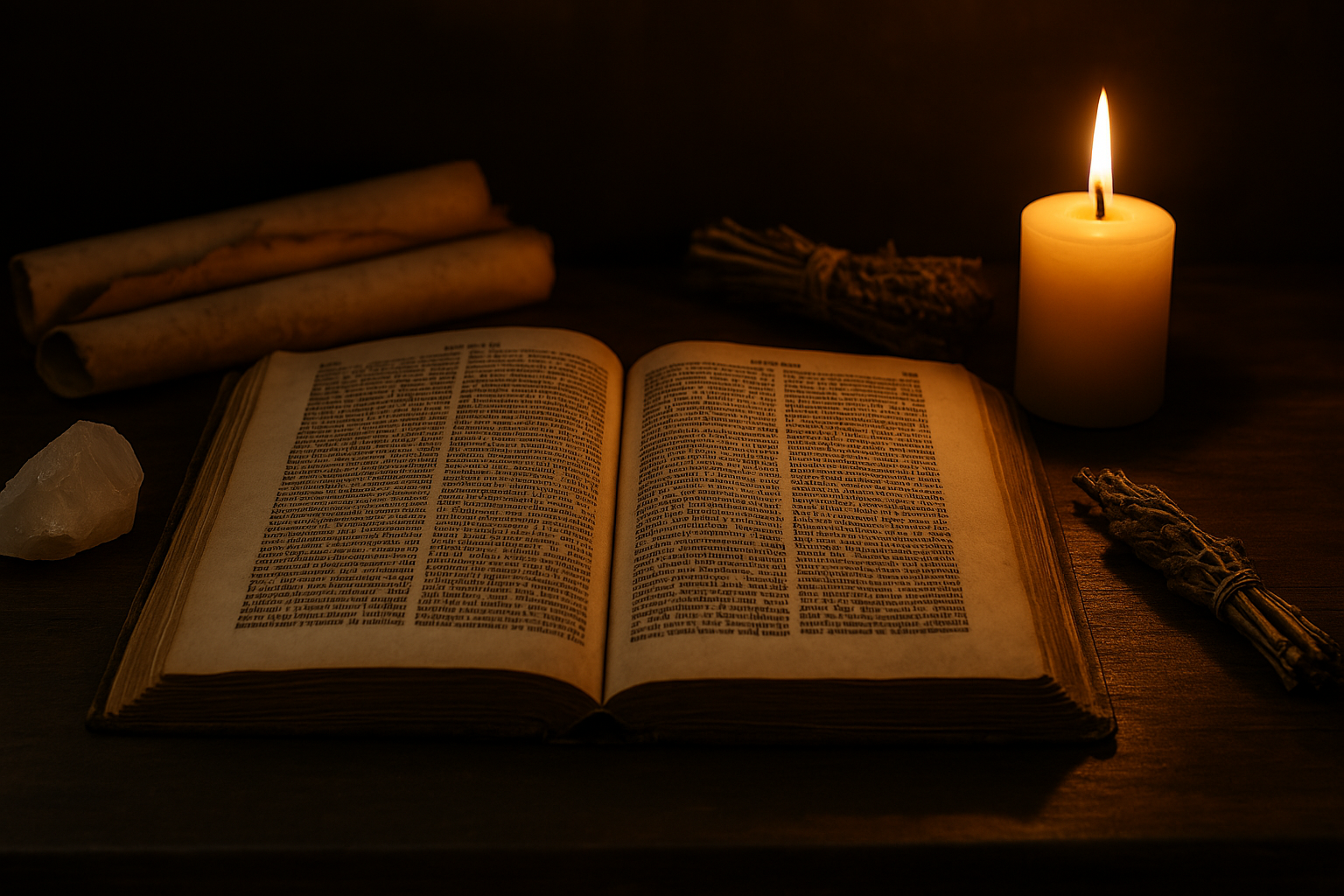
The apocryphal texts are a collection of ancient writings that, although related to the Bible and Judeo-Christian traditions, were excluded from the official canon of Scripture. Their content—often revealing, contradictory, or too esoteric for religious authorities—has been subject to concealment and censorship, but also admiration, curiosity, and scholarly interest.
These texts offer alternative visions of biblical figures, expanded or contradictory narratives, and theological, mystical, or symbolic reflections that invite a deeper and more pluralistic understanding of ancient spirituality. In many ways, they are the “forbidden books” of Christianity, but also windows into a richer and more complex universe of religious thought.
The word “apocryphal” comes from the Greek apokryphos, meaning “hidden” or “concealed.” Originally, it did not carry a negative connotation; it referred to texts reserved for the initiated or not available to the general public.
Over time, especially with the establishment of biblical canons by Christian churches, the term came to denote books not recognized as inspired by the Holy Spirit and therefore excluded from the official Bible.
Nevertheless, many of these writings were considered spiritually edifying and circulated for centuries in churches, monasteries, and circles of wisdom, especially in the Middle East, Ethiopia, and the Greco-Roman world.
These are Jewish or Judeo-Hellenistic writings that were excluded from the Hebrew canon but are still preserved in some Orthodox and Catholic Bibles as “deuterocanonical” books.
Examples:
Many of these were written in Hebrew, Aramaic, or Greek between the 3rd century BCE and the 1st century CE and offer prophetic, ethical, and poetic visions of Hellenistic and apocalyptic Judaism.
Writings that emerged between the 1st and 4th centuries CE, offering alternative accounts of the lives of Jesus, Mary, the apostles, and other biblical figures.
Notable Examples:
These texts are characterized by theological diversity: some are Gnostic, others proto-Catholic, and others reflect local spiritual traditions distinct from those dominant in Rome and Byzantium.
The formation of the biblical canon was a long and controversial process. Initially, many writings circulated freely among Jewish and Christian communities without a central authority defining “orthodoxy.”
Over time—especially from the 2nd century onward—the Christian Church began establishing which texts would be considered “canonical.” This culminated in the Councils of Laodicea (363 CE), Hippo (393), and Carthage (397), where the accepted books of the New Testament were defined.
Apocryphal texts were excluded for several reasons:
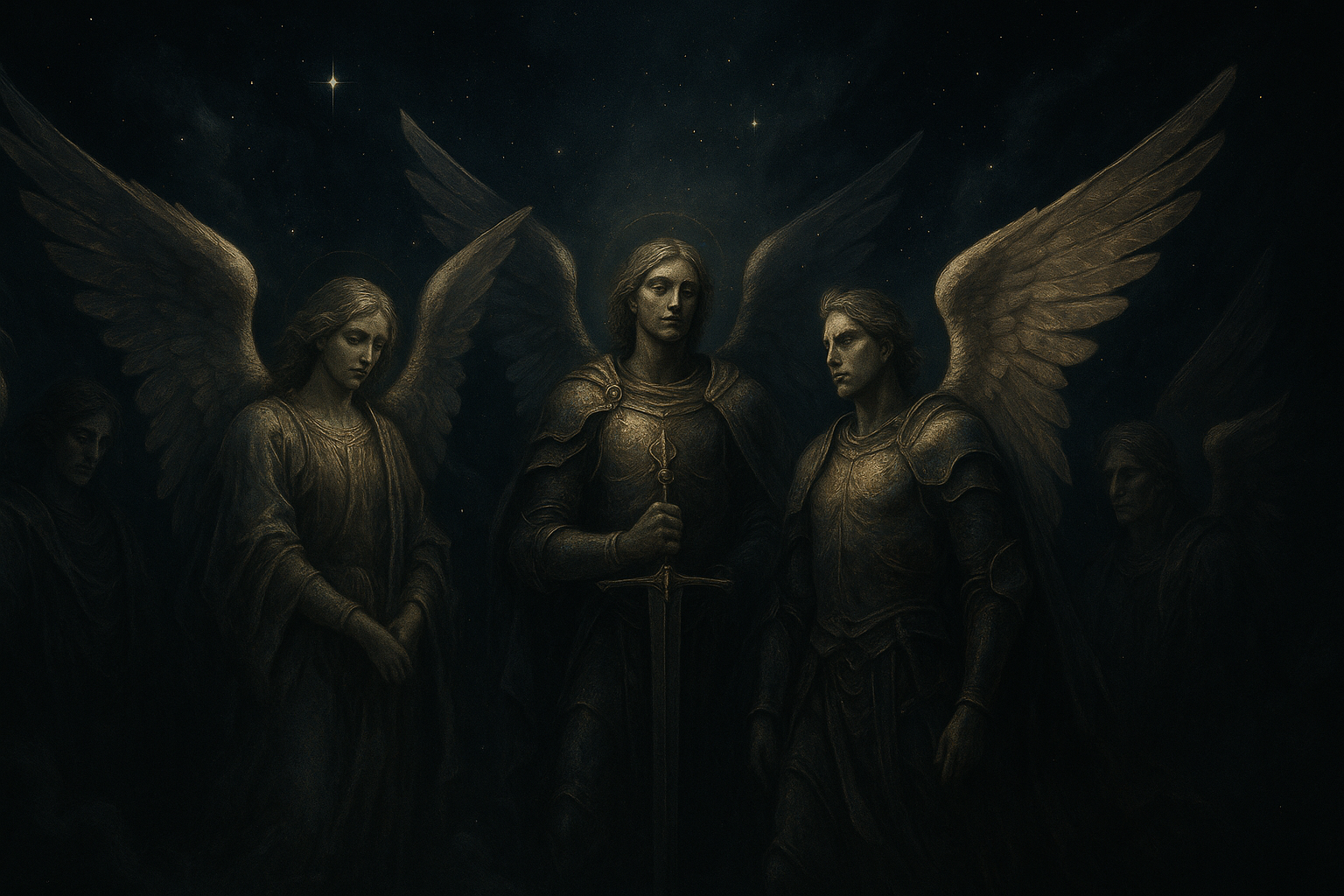
The Book of Enoch is one of the most enigmatic and revered apocryphal texts. It is divided into several sections, such as the Book of the Watchers, the Book of Parables, and the Book of Dreams.
It describes how a group of angels (the Watchers) descended to Earth and took human wives, fathering giants known as the Nephilim. These angels taught humans forbidden arts such as sorcery, metallurgy, cosmology, and cosmetics. God punished them, and Enoch was taken to heaven, where he became the scribe of the divine.
This text deeply influenced apocalyptic and angelological beliefs in Second Temple Judaism and is directly cited in the Epistle of Jude (verse 14).
In December 1945, a collection of codices in Coptic was discovered near Nag Hammadi, Egypt, containing numerous previously unknown or lost Gnostic texts.
This discovery revolutionized the study of early Christianity and revealed an entirely different tradition: the Gnostic Christians, who believed that inner knowledge (gnosis), not blind obedience, was the true path to the divine.
Key concepts in these gospels:
These gospels do not promote sin or anarchy, as they were once accused of doing, but rather a conscious, inward spirituality free from dogma.
Many apocryphal texts have been translated and preserved in ancient manuscripts:
Apocryphal texts are not mere literary curiosities. They are living testimonies of a rich and vibrant spirituality. They contain silenced voices, alternative visions, and seeds of inner freedom. Rescuing their message is also an act of historical and spiritual justice.
Today, far from being dangerous, these texts can help us better understand the human soul, the origins of religion, and the power of spiritual language. To discover them is not to deny official faith, but to complete the soul’s map with pieces that were once torn away.
For truth does not fear books. It fears silence.
—-> If you wish to dive into these ancient words and feel the echo of the hidden, you can download the full apocryphal texts here: Download in Spanish
(These texts have been compiled thanks to the work of Podcast Paranormal. Our gratitude to them for preserving and sharing this forgotten wisdom)