Your cart is currently empty.
When you add a product, it will appear here. Ready to get started?

The Clavicula Salomonis, or Key of Solomon, is arguably the most influential and widely circulated magical text in the Western occult tradition. Attributed pseudepigraphically to King Solomon, this medieval grimoire has shaped ceremonial magic, ritual practice, and esoteric philosophy for centuries. Despite the attribution, the text as we know it today is a complex compilation that emerged between the 14th and 17th centuries, though its origins draw upon older Jewish, Greco-Egyptian, and Arab magical traditions.
This article delves deeply into the historical development of the Key of Solomon, its structure, rituals, magical tools, influence on later grimoires, and its role in both occult and scholarly circles.
Solomon, the biblical King of Israel, is associated in Jewish, Christian, and Islamic traditions with wisdom, divine favor, and command over spirits. In extra-biblical texts such as the Testament of Solomon (circa 1st–5th century CE), he is portrayed as a master magician who uses a magical ring to control demons and build the Temple.
This legend gave rise to an entire genre of “Solomonic” magical texts. The Key of Solomon fits into this tradition, although its earliest known manuscripts are medieval and written in Latin, Italian, French, and later, English.
The oldest surviving versions of the Key of Solomon date from the 14th to 16th centuries. These manuscripts are held in libraries such as the British Library (e.g., Sloane MS 3847) and the Bibliothèque de l’Arsenal in Paris. Most manuscripts are anonymous and show signs of evolution over time, suggesting oral transmission and adaptation by various scribes.
There is no single definitive version of the text—rather, there are families of manuscripts with variations in structure, content, language, and style.
The Key of Solomon is typically divided into two books:
This section provides detailed instructions for the magician to prepare themselves spiritually and physically for the work ahead:
The magician must invoke God (usually referred to by Hebrew names such as Adonai, Elohim, Tetragrammaton) and demonstrate spiritual purity.
This section outlines how to:
The spirits are not summoned arbitrarily; each corresponds to a specific planetary sphere and time. The text often warns of the dangers of improper practice.
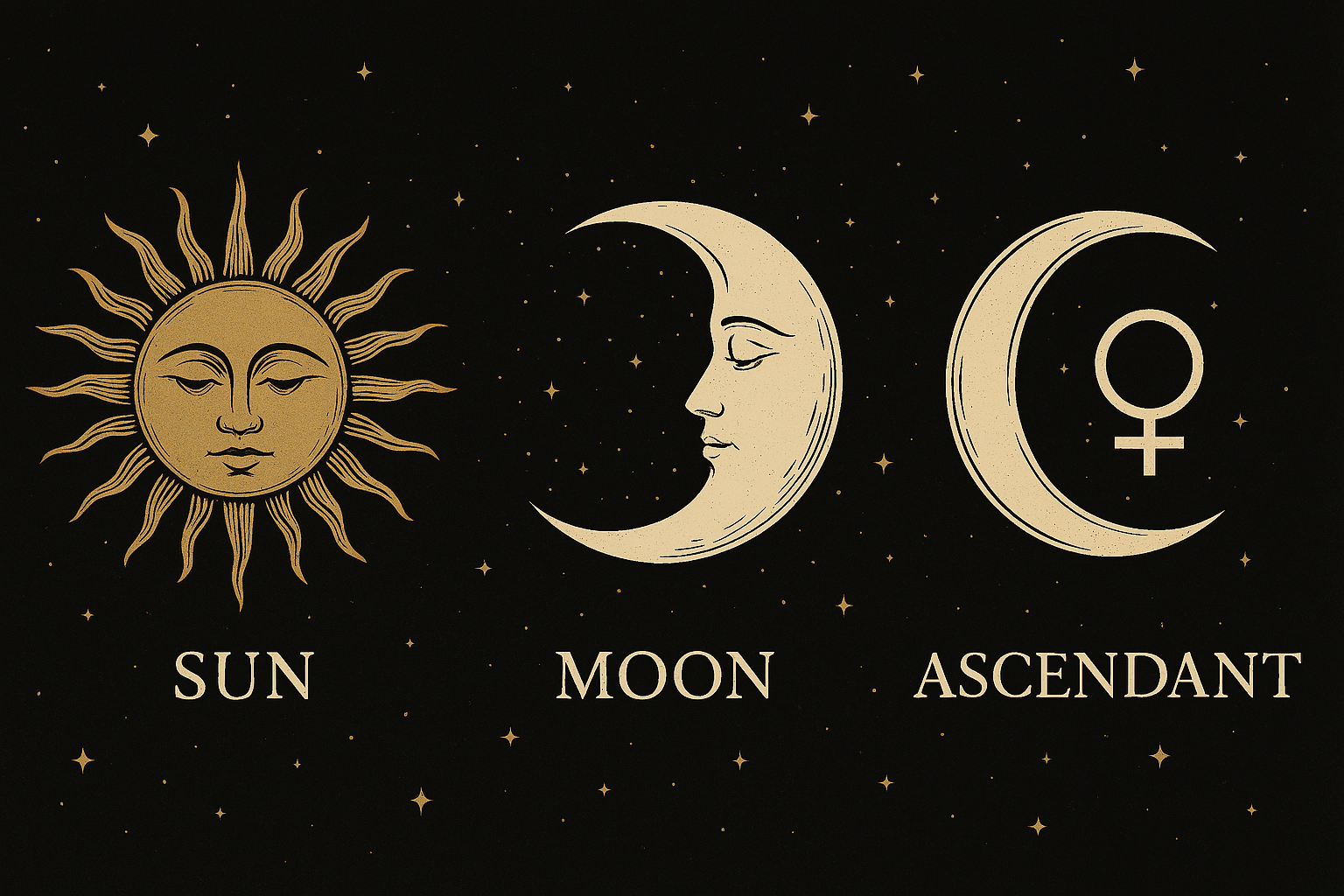
The Key of Solomon includes numerous magical seals, pentacles, and sigils, particularly associated with the seven classical planets (Sun, Moon, Mercury, Venus, Mars, Jupiter, Saturn).
Each planet has:
These pentacles are to be inscribed on parchment, consecrated with appropriate rituals, and used only when astrologically appropriate.
Although written largely in Latin or vernacular languages (Italian, French, English), the Key of Solomon is peppered with Hebrew divine names and concepts derived from Kabbalah. It reflects a syncretic blend of Jewish mysticism, Christian esotericism, and Islamic astrological-magic—echoing the intellectual melting pots of medieval Spain and Italy.
The text influenced many later grimoires, including:
The Key of Solomon does not depict magic as the manipulation of occult forces by personal will. Instead, it presents magic as a divine science, requiring obedience to God’s will, humility, moral purity, and precise ritual observance.
The magician is a mediator between heaven and earth, using divine permission to compel spirits through names of God, psalms, prayers, and sacred geometry.
A central concept in the Key is the ritual circle, often inscribed with divine names and angelic sigils. Within this sacred space, the practitioner is protected and sanctified. The circle represents:
The operator stands at the center, invoking with the Names of Power, including Tetragrammaton (YHVH), El, Elohim, and others.
Like many grimoires, the Key of Solomon circulated underground. Often it was hidden, coded, or disguised to avoid accusations of heresy or witchcraft. Marginal notes in some manuscripts suggest scribes altered names or omitted formulas to protect themselves.
It was only in the 19th century that the text became more widely known, when S. L. MacGregor Mathers (co-founder of the Hermetic Order of the Golden Dawn) published a partial English translation in 1889. His edition, though influential, included additions and romantic flourishes that reflect Victorian occultism rather than medieval authenticity.
Today, the Key of Solomon is used by ceremonial magicians, Thelemites, Kabbalists, and esoteric practitioners. It is studied both as a historical artifact and as a living spiritual system. Modern editions vary widely, from scholarly reconstructions of manuscript families to practical handbooks for magical operations.
The grimoire’s enduring appeal lies in its balance between mysticism and pragmatism—offering a structured method for seeking divine wisdom and accessing spiritual forces.
The Clavicula Salomonis is not merely a book of spells, but a roadmap to a sacred cosmology where magic, morality, and divine order are deeply intertwined. It remains one of the pillars of Western esotericism—revered, studied, practiced, and reinterpreted across generations.
Its legacy continues to inspire those who seek not only power, but understanding, reverence, and communion with the invisible worlds.