History, Meaning, and Evolution of a Millenary Symbol
The star that transcends the centuries
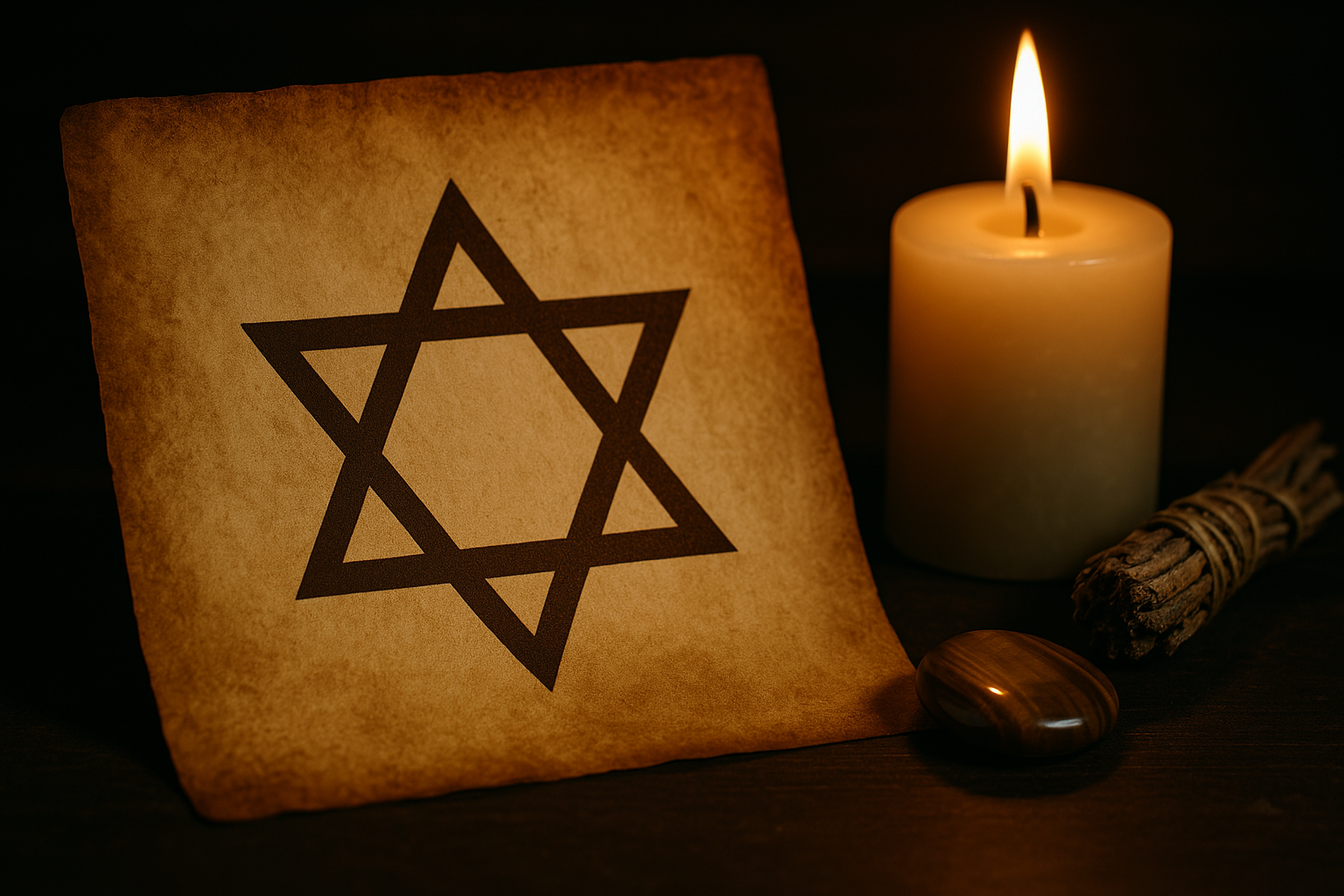
The so-called Seal of Solomon is one of the oldest, most mysterious, and powerful geometric symbols in history. Composed of two interlaced equilateral triangles forming a six-pointed star or hexagram, it has been interpreted in multiple ways: as a protective amulet, royal sign, alchemical symbol, or spiritual emblem.
Although its most well-known popular association is with modern Judaism as the Star of David, its origin and historical use extend far beyond, encompassing Mesopotamian, Hindu, Islamic, Christian, and esoteric cultures. The Seal of Solomon evokes the intersection between the human and the divine, the earthly and the celestial, the masculine and the feminine.
Origin of the symbol: long before Solomon
The hexagram symbol is older than any Solomonic reference. It appears in several ancient cultures with different meanings:
- Mesopotamia and Assyria (3000 BCE): Six-pointed stars associated with celestial gods or symbols of cosmic power have been found engraved.
- India: In Hinduism, the hexagram appears as the Shatkona, symbol of the union between Shiva (masculine energy) and Shakti (feminine energy), meaning universal balance.
- Egypt: Opposing triangles were used to represent balanced elements.
- Ancient Greece: Pythagoreans and Neoplatonists used geometric shapes to represent harmony and divine proportion.
The use of the symbol as a specific “Seal of Solomon” appears in the Middle Ages, when it begins to be linked with legends and magical texts attributed to King Solomon, a figure revered in Judaism, Christianity, and Islam.
Solomon and the mystical tradition: where does the connection come from?
In the Bible, Solomon is described as the wise king, builder of the Temple, and possessor of divine power. However, the use of a “seal” or magical ring in the shape of a star is not mentioned in biblical texts.
The association between Solomon and this symbol arises in medieval esoteric texts:
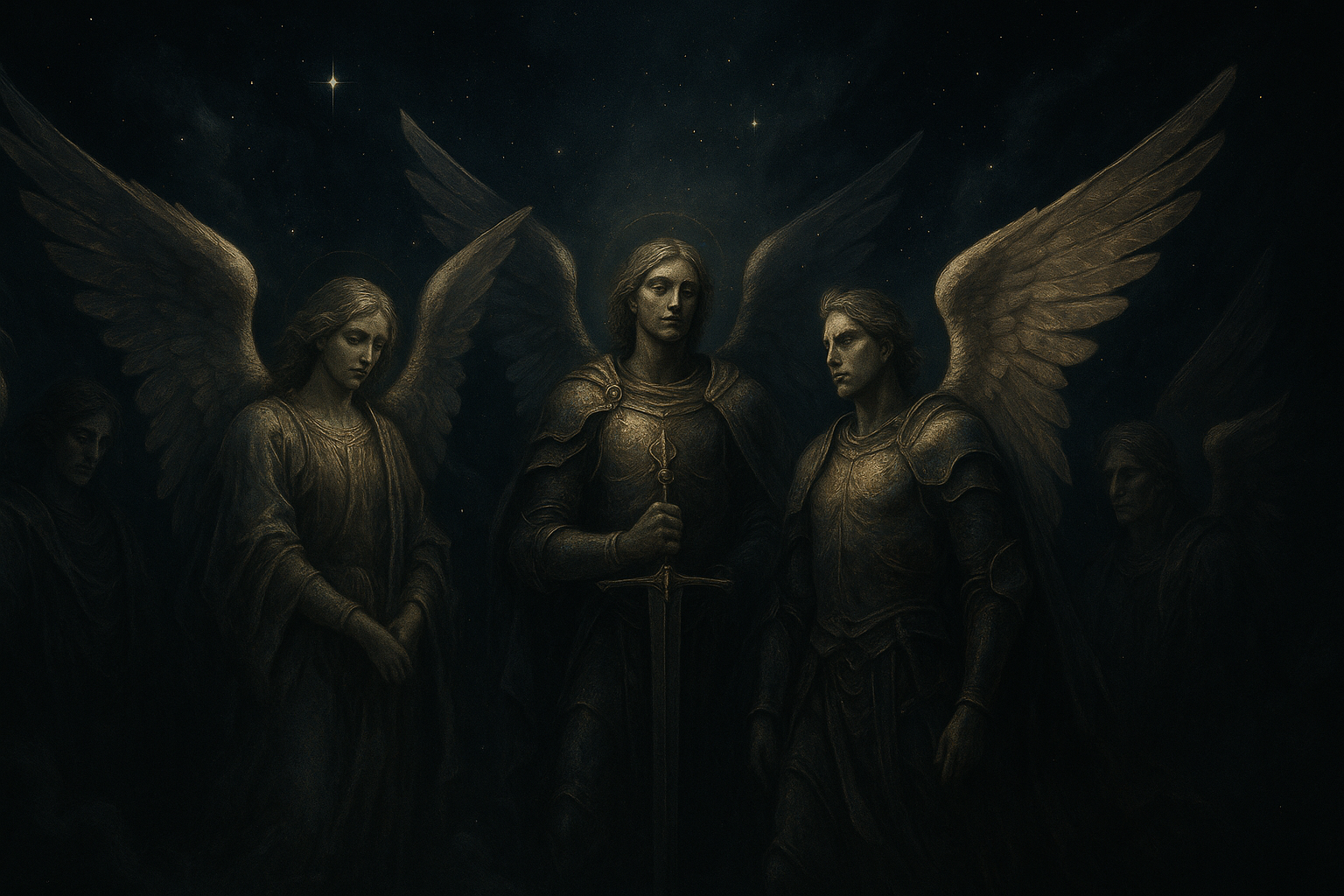
- The Testament of Solomon (1st–3rd century CE, Hellenistic origin): attributes to the king a magical ring given by the Archangel Michael, with which he could summon, control, and exorcise demons. This ring is described as having a carved seal, though it does not specify it was a hexagram.
- In medieval Arabic literature, Solomon (Sulaymān) is considered a prophet endowed with power over jinn and animals, and his famous ring with a seal controlling hidden forces is mentioned. Some Islamic stories began to represent this seal as a six-pointed or double star.
- From the 12th century onward, in Kabbalistic and European alchemical texts, the symbol is already recognized as the Seal of Solomon, especially in ceremonial magic manuscripts like the Key of Solomon or the Lemegeton, where it appears as a protective sign and spirit controller.
Evolution and diffusion of the symbol
During the Middle Ages and the Renaissance, the Seal of Solomon became increasingly common as:
- Protective symbol in talismans, doors, manuscripts, and grimoires.
- Alchemical element, representing the union of the four elements and cosmic balance.
- Emblem in medieval synagogues, though not yet an official symbol of Judaism.
In the 17th and 18th centuries, it began to consolidate as a symbol of the Jewish people, but it was not until the 19th century, with the rise of the Zionist movement, that it was formalized as the Star of David (Magen David) and became central to the flag of the State of Israel.
Differences between Seal of Solomon and Star of David
Although visually similar, it is important to distinguish:
- The Seal of Solomon has a more esoteric, mystical, and magical focus. It is linked to alchemy, ceremonial magic, and the power to seal or summon entities.
- The Star of David is its modern symbolic evolution within Judaism, as an emblem of spiritual identity and unity.
Both share a geometric root, but are not identical in use or origin.
Presence in other cultures and religions
- In Sufi Islam, the hexagram appears in architecture and amulets as a sign of balance and divine protection.
- In medieval Christianity, it was used as a symbol of creation and the “Seal of the Virgin.”
- In European esotericism, it was part of planetary seals, being associated with Saturn and occult knowledge.
- In Freemasonry and modern occultism, it appears as a symbol of the integration of opposites, light and shadow, heaven and earth.
One symbol, many stories
The Seal of Solomon is much more than a star: it is a convergence of ancient knowledge, a bridge between cultures, and sacred geometry that has crossed religions, continents, and centuries.
From Hindu temples to medieval magical manuscripts, from Islamic mosaics to modern flags, this symbol holds in its lines the reflection of a humanity that has always sought balance between the visible and the invisible.
Perhaps that is why, as tradition says, the true power of the seal was not in the metal, but in the soul of the one who bore it.