History, Symbolism, and Ancestral Power
Introduction: The Enigma of the Witch’s Knot
In the vast tapestry of magical symbols woven by cultures throughout history, the Witch’s Knot stands out as a powerful emblem of protection, feminine power, and divine connection. This intricate design, composed of interlaced loops, has been used for centuries in various esoteric and magical traditions. Its presence in amulets, inscriptions, and rituals underscores its significance as a tool for safeguarding and channeling energy. Often hidden in plain sight, it becomes a silent spell, a sacred weaving that protects without being seen.
Historical Origins: Roots in Knot Magic
The practice of knot magic is ancient and appears in multiple cultures:
- Ancient Egypt: The Tyet, also known as the “Knot of Isis,” resembles the ankh but with downward-curving arms. It represents the protection of the goddess Isis and was used as a funerary amulet to safeguard the deceased in the afterlife.
- Norse and Celtic Traditions: Knots and interlaces were common in art and symbolism, representing the interconnectedness of life, eternity, and protection from negative energies. In Norse culture, the practice of seidr involved the use of symbols and rituals to influence fate and nature. Rune knots, such as those found on Swedish and Norwegian rune stones, also reflect closed forms of protection similar to the Witch’s Knot.
- Medieval Europe: During the Middle Ages, witches were believed to use knots to “bind” the weather, influence people or events, and protect against harm. The Witch’s Knot was carved into doorways of homes and barns to ward off evil influences. This symbol also appears in old grimoires and folk magic texts.
Mentions in historical texts:
- “The Book of Protection” (15th–16th century): Collections of spells and protective symbols used by witches and healers. Though not named directly, graphics nearly identical to the Witch’s Knot appear as protective seals for property and crops.
- “Le Dragon Rouge” (The Red Dragon, 16th–17th century): This French grimoire, also known as the Grand Grimoire, contains diagrams of magical seals and symbolic knots used to invoke and control spiritual forces. Some resemble the four-looped knot structure.
- “The Discoverie of Witchcraft” by Reginald Scot (1584): Though written to debunk belief in witchcraft, it contains indirect descriptions of magical practices involving knotting to bind spells or curses, indicating the widespread use of symbolic knots in Europe.
- “Clavicula Salomonis” (The Key of Solomon): One of the most influential grimoires in Western tradition, containing numerous protection symbols formed from closed lines and geometric shapes reminiscent of the Witch’s Knot.
These references suggest that although the term “Witch’s Knot” is modern, its form and function as a symbol of power and protection have ancient roots in oral and written magical traditions.
Symbolism of the Witch’s Knot
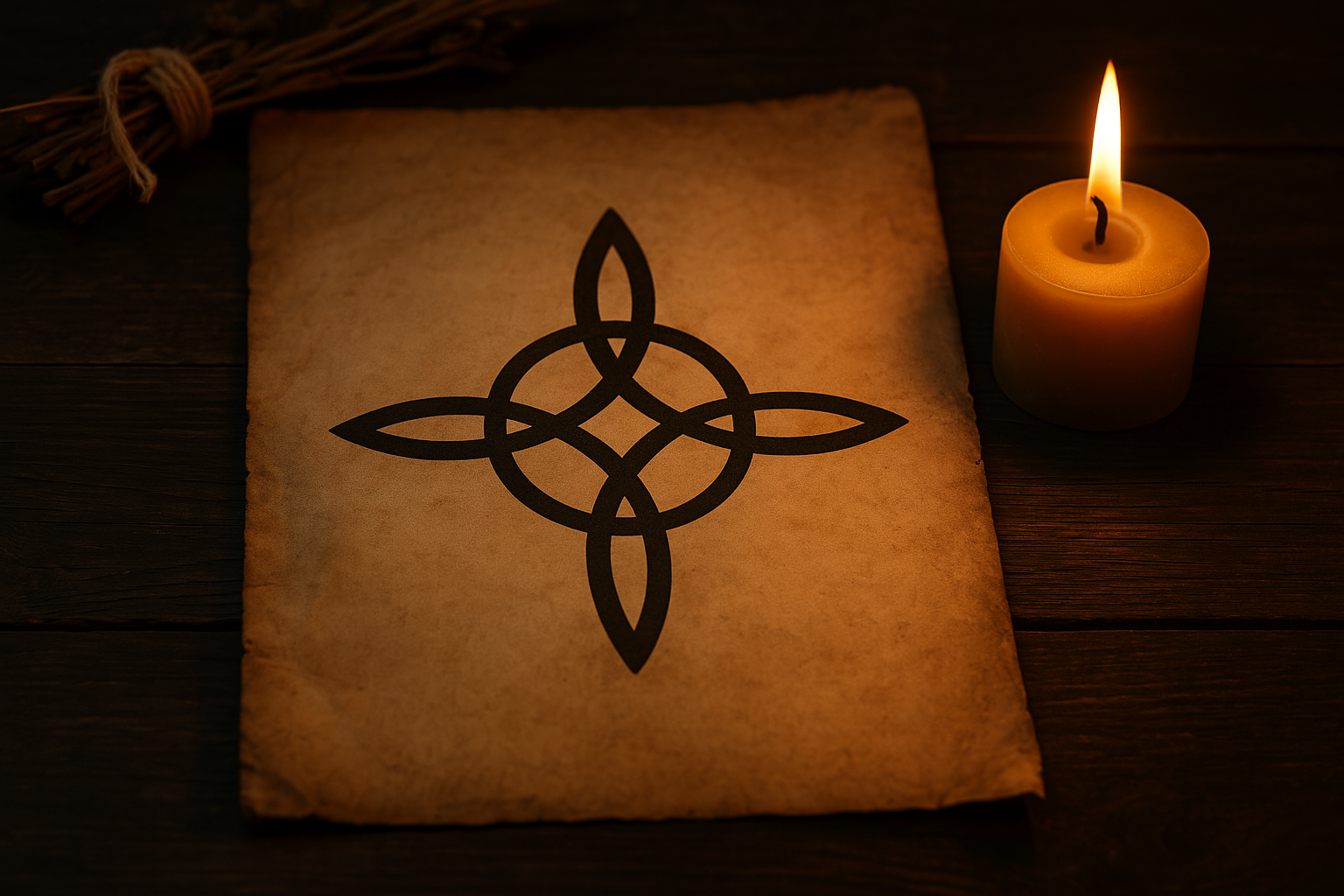
The Witch’s Knot is typically depicted with four interlaced loops, forming a closed and continuous pattern symbolizing eternity. Its main symbolic meanings include:
- Magical Protection: Acts as a shield against negative energies.
- Infinite Cycle: Without beginning or end; represents the soul’s continuity and the cyclical nature of time.
- Hidden Feminine Power: Associated with silent witchcraft and intuitive wisdom.
- Weaving of Intentions: Its structure reflects the complexity of desires, spells, and energy work.
Symbolic Correspondences:
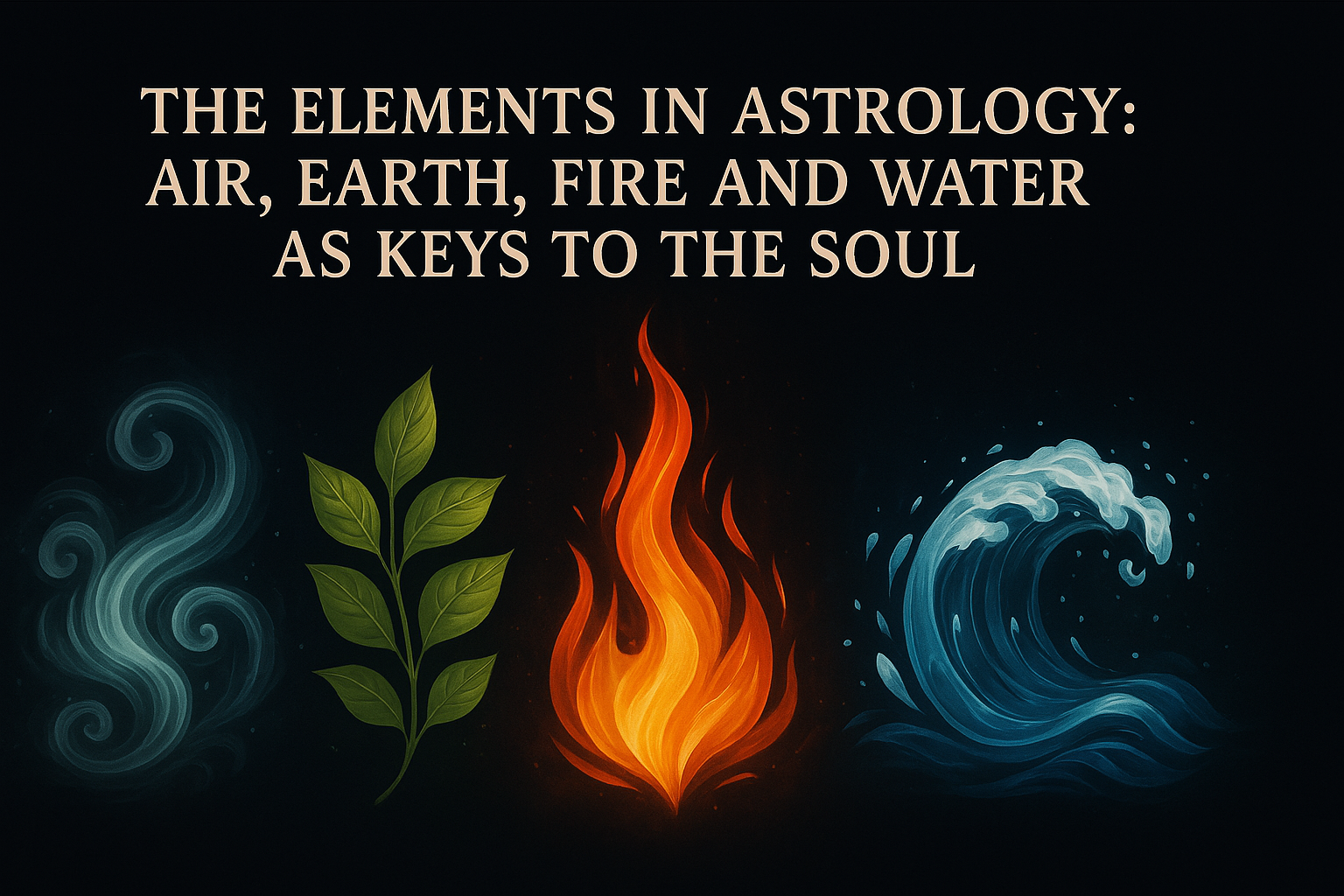
- The Four Elements: Earth, Air, Fire, and Water.
- The Four Cardinal Directions: North, South, East, and West.
- The Four Seasons: Spring, Summer, Autumn, and Winter.
Magical and Esoteric Uses
1. Personal Amulet
Worn as jewelry or a tattoo, it serves to protect the wearer physically, mentally, and spiritually.
2. Home Protection
Drawn on doors, windows, or mirrors to block negative energy from entering.
3. Ritual Seal
Used at the end of a spell to seal the intention. It can also be activated with fire or incense smoke.
4. Embroidered or Carved
In fabric, clay, or wood, it becomes a power object that channels the energy of its creator.
How to Draw the Witch’s Knot
It can be represented as a continuous line forming a figure with four loops and a square center. It can be adapted in Celtic or modern style. Use black ink for protection, gold for empowerment, and white for clarity.
Protection Ritual with the Witch’s Knot
- Draw the knot on paper or trace it in the air with incense.
- Light a black or white candle.
- Repeat: “I knot the shadow, I knot the light. Let nothing enter but what is right. Let nothing leave but peace in sight.”
The Witch’s Knot Today
- A symbol adopted by neopagans and modern witches.
- Found in jewelry, grimoires, ritual décor, and tattoos.
- Its meaning evolves with practice but always retains its essence of protection and ancestral wisdom.
The Legacy of the Invisible Thread
The Witch’s Knot is more than a symbol; it is a living spell. A representation of power braided in silence, protecting without words, linking the one who traces it to a lineage of witches, healers, sages, and weavers of intentions.
To trace it is to invoke protection. To wear it is to remember that the deepest power does not shout—it weaves.